Abstract

This paper reflects upon intellectual possibilities of Raymond Williams’ classic study The Country and the City (1975) within current urban and regional research. First, the paper canvasses the relevance of the book by constructing a frame of reference based on its citations in urban and regional studies. The principal findings of this approach discern frequent use of the main points developed by Williams in recent discourse. Thereafter the paper raises two issues that have been somewhat neglected in the present adoption of The Country and the City. First, the possibilities of the concept of structure of feeling still seem underdeveloped in urban and regional research today. The idea of generation-specific structures aims at the heart of the habit of urban theory-making. Second, drawing on the work on hierarchies of French anthropologist Louis Dumont the binary relationship between country/city shown in the book could be used as a fruitful methodological starting point for thinking about representation in more recent studies of spatial relationships.

http://journals.sagepub.com/doi/pdf/10.1177/0042098015571241

ANTI-OEDIPUS PARAGRAPH 1: commentary

terenceblake's avatarAGENT SWARM

I will be commenting the famous incipit to Deleuze and Guattari’s ANTI-OEDIPUS. Here is my literal translation of the first paragraph:

It functions everywhere, at times without break, at times discontinuously. It breathes, it heats, it eats. It shits, it fucks. What a mistake to have ever said the it. Everywhere it is machines, not at all metaphorically : machines of machines, with their couplings, their connections. An organ-machine is connected to a source-machine : the one produces a flow that the other cuts. The breast is a machine that produces milk, and the mouth a machine coupled to it. The anorexic’s mouth wavers between an eating-machine , an anal machine, a talking machine, a breathing machine (asthma attack). Hence we are all handymen: each with his little machines. An organ-machine, for an energy-machine: all the  time, flows and cuts. Judge Schreber has divine rays in his ass. Solar…

View original post 1,106 more words

What is a Dissertation? // What is an Education?

wickertongue's avatarHayden Westfield-Bell

BoyPoolRhizome by Mark Ingham

I think I stumbled on this article through Leiter Reports – but don’t quote me on that. I’ve got a Feedly library dedicated to philosophy feeds which I go through on occasion, and this particular article caught my attention. Here’s the full text, and I recommend you go and read it.

Essentially, Bharath Vallabha wanted to write a very different kind of dissertation – something non-linear, closer to Wittgenstein’s ‘web’ approach to writing. Unfortunately, due to the constraints of the education system and some internal decisions influenced by the commotion caused, this approach proved difficult and was ultimately shelved. I felt for Vallabha, as I’d struggled with something similar during my MA, and I wanted to respond to something in his lengthy post that made me feel incredibly uncomfortable:

[…] but about the sociological fact that I wasn’t seen as a genius, and so I couldn’t write the way Wittgenstein did. The more I thought…

View original post 983 more words

Teaching Students to Break the Rules

elinorrobertson's avatarChannel View Publications and Multilingual Matters

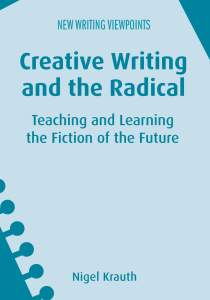
This month we are publishing Nigel Krauth’s book Creative Writing and the Radical which explores the ideas of innovation and experimentation within creative writing. In this post, Nigel discusses how he taught students to break the rules and how the way creative writing is taught must change to incorporate the ever-evolving modern world.

I’ve taught creative writing for 25 years at Griffith University, but only in one course – my Radical Fictions course – have students thanked me for teaching them how to break the rules. In addition, they’ve said: ‘I wish I had taken this course at the start of my degree, not at the end of it’.

In reply I used to say: ‘You need to know the rules before you can break them well.’ But nowadays I don’t say that. The students know already that rule-breaking is part of the mainstream in literary publishing.

Creative Writing and the RadicalMy book Creative Writing…

View original post 730 more words