AFTERIMAGES
Photographs as an External Autobiographical Memory System and a Contemporary Art Practice
Mark Ingham
///
///
Abstract
My proposition developed in this thesis is that photographs have changed the way the past is conceived and therefore the way the past is remembered. Just as the inventions of the telescope and microscope radically changed our understanding of distance and space on a macro and micro level, the invention of the photograph has radically altered our concepts of the past, memory and time.
My starting point is a collection of photographs taken by my grandfather, Albert Edward Ingham, which is used both in my studio work and as a basis for my theoretical writing. My concerns as an artist are with the ways in which familiar photographs and their relation to ideas of personal memory can be incorporated in an art practice.
The written element begins with a reflection into my motivation for using this collection and its usefulness to both my written and studio work. I include a short biography of my grandfather, leading me to consider biography and autobiography, and their relation through photography to autobiographical memory. This is followed by an in depth discussion on autobiographical memory and how it differs from other forms and processes of memory. With this I have placed a discussion of contemporary ideas on photographs. Finally I look closely at ‘external memory systems’ and how these relate to changes in the way autobiographical memory operates in relation to photographs.
The emphasis of this thesis is to explore ways to elucidate my own practice as an artist and to offer a commentary on those issues which have been central to its development over the past several years. This has been, and continues to be, a process of making explicit and of clarifying those influences that have resulted in me pursuing autobiography as the major concern of my practice as an artist.
///
Introduction
The aim of this thesis is to explore ways to elucidate my own practice as an artist and to offer a commentary on those issues which have been central to its development over the past several years. This has been, and continues to be, a process of making explicit and of clarifying those influences that have resulted in me pursuing biographical and autobiographical traces as the major concern of my practice as an artist.
My starting point is a collection of photographs taken by my grandfather, Albert Edward Ingham, which is used both in my studio work and as a basis for my theoretical writing. My concerns as an artist are with the ways in which familiar photographs and their relation to ideas of personal memory can be incorporated in an art practice. Also, how autobiographical memory can be reflected using photographs, and how photographs can have an affect on the autobiographical memory of the spectator.
My proposition developed in this thesis is that photographs have changed the way the past is conceived and therefore the way the past is remembered. Just as the inventions of the telescope and microscope[1] radically changed our understanding of distance and space on a macro and micro level, the invention of the photograph has radically altered our concepts of the past, memory and time.
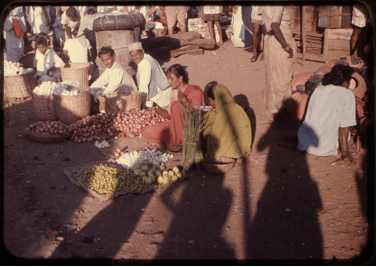
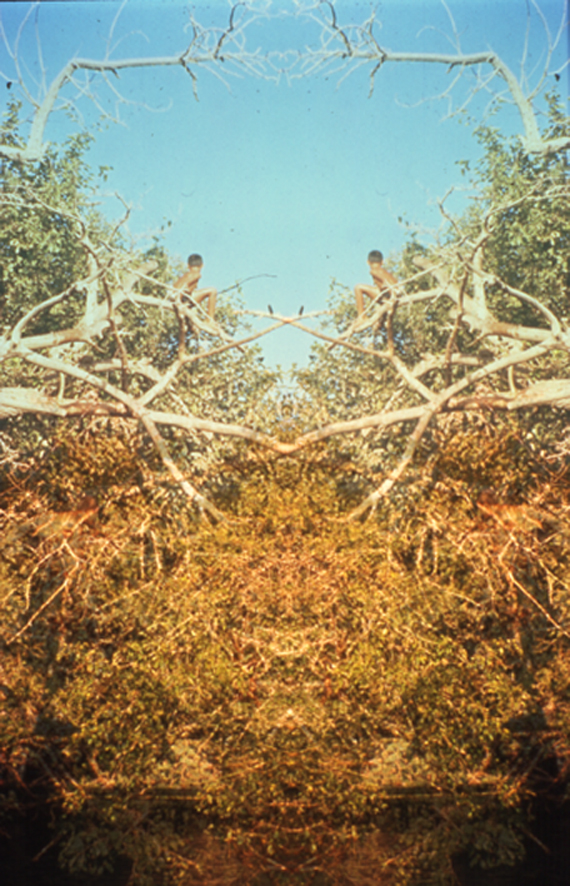
Image form A.E Ingham’s Photographic collection. India 1966/67
I will argue that photographs, both conceptually and as a form of visual representation, are radically different from other visual depictions. This difference is central to my enquiry into the relationship between photographs and autobiographical memory[2]. Photographs not only have metaphorical relationships with memory, but have also changed how our autobiographical memory functions. They have changed our relationship to – and of thoughts of – the past; and have therefore changed memory itself and the way memory is thought about.
This change is not only due to the increase in available visual information brought about by photography, but is also related to the specific qualities of the photograph, distinguishing the medium from all other forms of representation. These include its presumed objectivity, its ease of manufacture and distribution, and its wide appeal both in production and consumption. It is these particular qualities and their relationship to autobiographical memory that have directed my research.
I have identified through my research a lack of consensus in contemporary photographic theory about the meaning, function and nature of the photographic image. These disagreements make problematic an enquiry into photography’s relationship to autobiographical memory. Some recent analyses of photography overcomes this problem by taking a multi-disciplinary approach, essentially combining the debate emphasising the interpretation of the image [its ‘nature’] with that where the emphasis lies with its context. Such a multi-disciplinary analysis entails looking at a photograph as a text, through semiotics, as well as examining its ‘essential’ qualities as a medium and the contexts in which its meaning is produced and operates. Applying this multi-disciplinary methodology to my grandfather’s collection within this thesis, I will be examining photography’s ability to interrogate and produce autobiographical memories.
The written element begins with a reflection into my motivation for using this collection and its usefulness to both my written and studio work. In this I include a short biography of my grandfather, leading me to consider biography and autobiography, and their relation through photography to autobiographical memory. This is followed by an in depth discussion on autobiographical memory and how it differs from other forms and processes of memory. I have then created a taxonomical analysis of the collection, engendering a greater understanding of the desires and concerns that motivated my grandfather’s photographic practice. With this I have placed a discussion of contemporary ideas on photographs and an analysis of Roland Bathes’ Camera Lucida. Finally I look closely at ‘external memory systems’[3] and how these relate to changes in the way autobiographical memory operates in relation to photographs.

Me drawing Ajanta. 2000
[1]Tools like the telescope and microscope have led the recent explosion of knowledge of our universe. Today telescopes allow us to see galaxies 13 billion light-years away (1025 m) and microscopes allow us to see even single atoms (about 10-10 m) Discoveries made with telescopes have shaped current theories about the nature and origin of the universe. Discoveries made with microscopes have shed light on the nature and origin of the matter that makes up the universe and on the nature and origin of life. http://invsee.asu.edu/Modules/size&scale/unit3/unit3.htm
[2] Definition of autobiographical memory is a memory for events and issues related to yourself and includes memories for specific experiences and memory for the personal facts of one’s life.
[3] Merlin Donald describes this as, “The growth of the external memory system has now so far outpaced biological memory that it is no exaggeration to say that we are permanently wedded to our great invention, in a cognitive symbiosis unique in nature.” He also says. “Individuals in possession of reading, writing, and other visuo-graphic skills thus become somewhat like computers with networking capabilities; they are equipped to interface, to plug into whatever network becomes available. And once plugged in, their skills are determined by both the network and their own biological inheritance. Humans without such skills are isolated from the external memory system, somewhat like a computer that lacks the input/output devices needed to link up with a network. [Donald 1991]

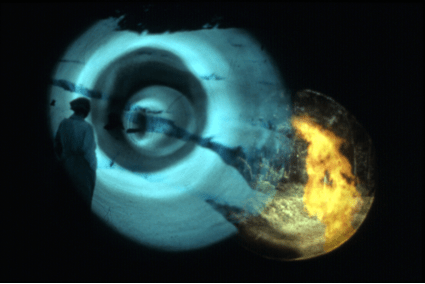
Shadows of the Patriarchs: From 120 Days and Nights of Stammering and Staggering 2008-2015
///



 Mark Ingham